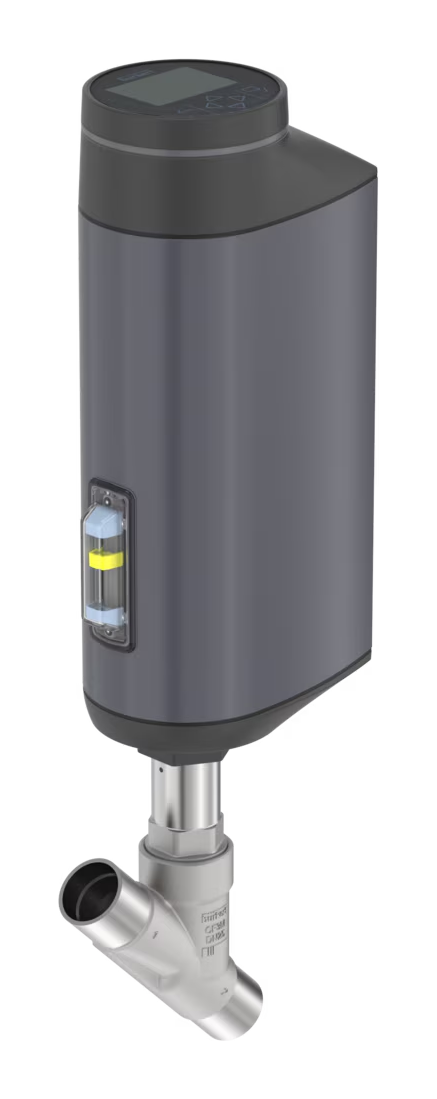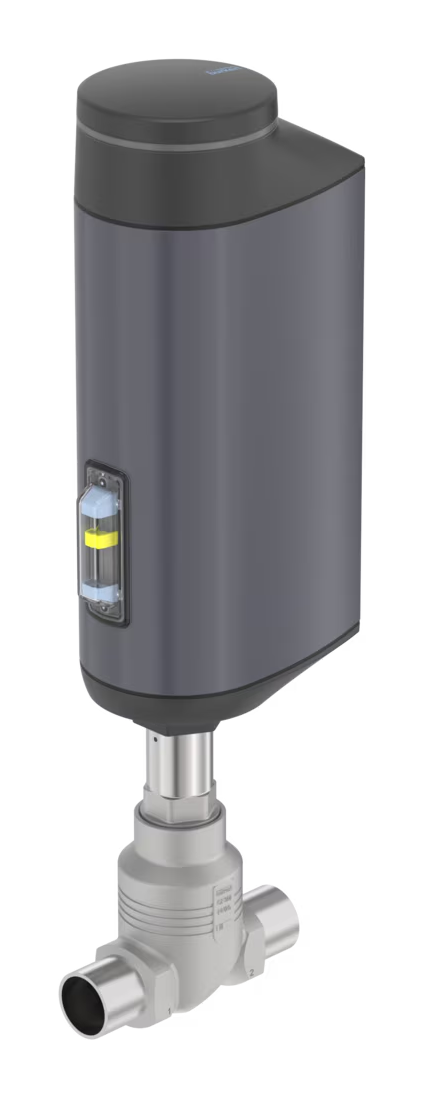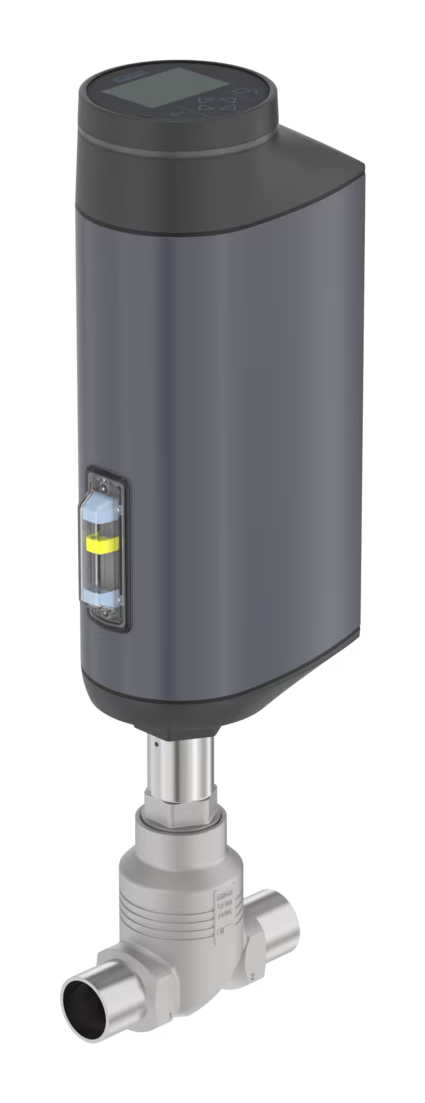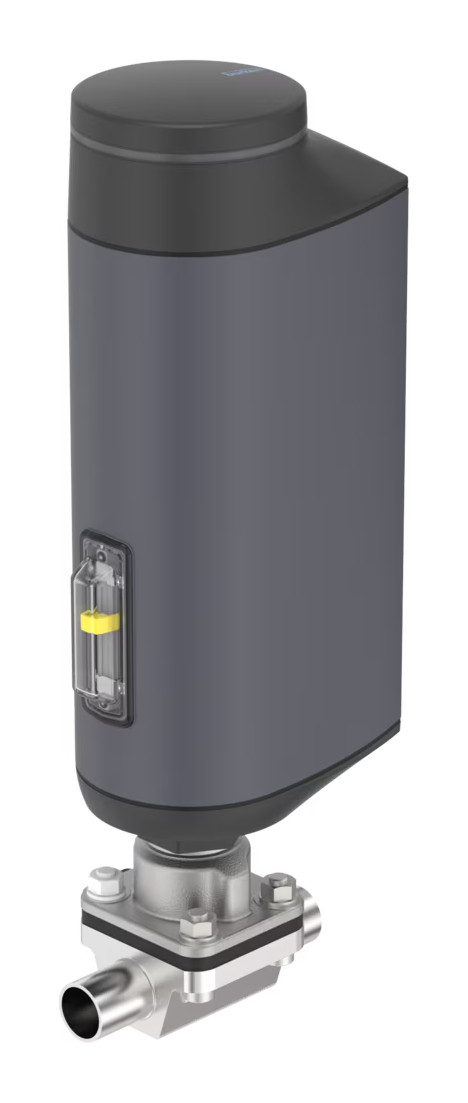
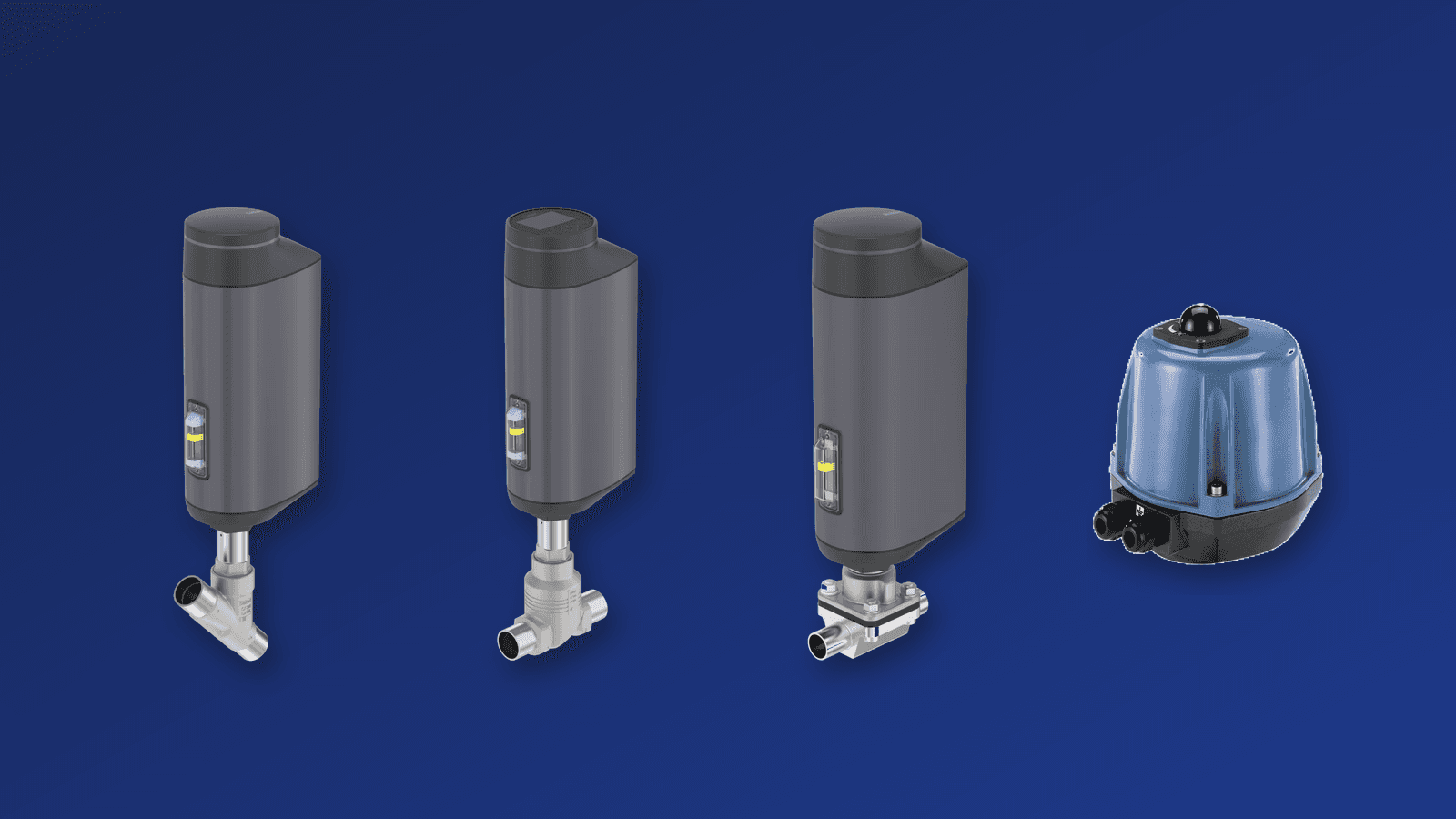
Electromotive vs pneumatic valves used to be an easy call: if the plant had compressed air, process valves were pneumatic. Today, more projects ask whether they can drop the air supply altogether, for remote skids, small plants, energy targets or simply to remove a utility. Bürkert's electromotive valves are built for exactly that question.
This guide compares electric and pneumatic actuation and maps the decision to Bürkert's electromotive range, from the Type 3320 on/off angle seat valve to the Type 3361 globe control valve.
What an electromotive valve is
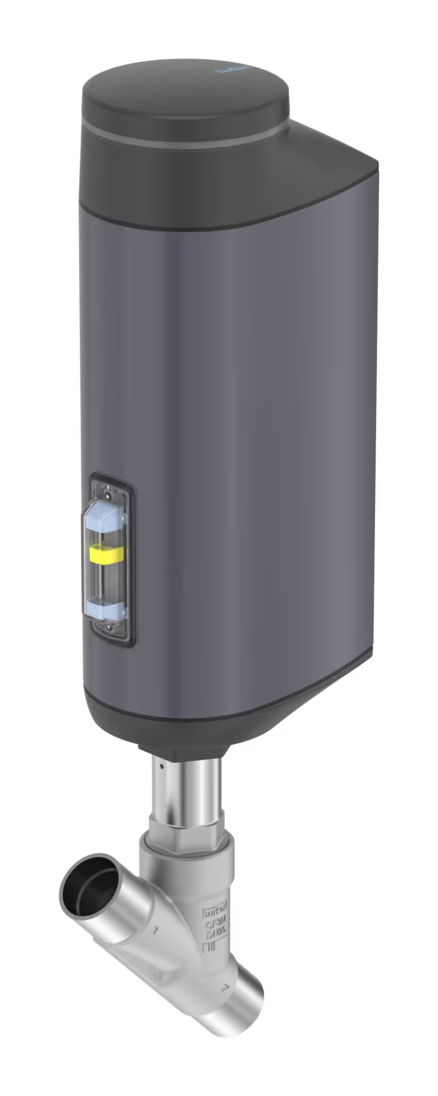
An electromotive valve replaces the pneumatic piston actuator with an electric linear actuator. In Bürkert's 33xx series, a ball-screw drive moves the valve at up to 6 mm/s, so it reacts almost instantly to process signals. An optional energy storage module drives the valve to its safety position if power fails, which answers the classic objection that electric valves cannot fail safe.
On/off and control versions for each body
| Body style | On/off | Control |
|---|---|---|
| Angle seat | Type 3320 | Type 3360 |
| Globe | Type 3321 | Type 3361 |
| Diaphragm | Type 3323 | Type 3363 |
The control versions position the cone or diaphragm precisely, and Bürkert notes that pressure variations or shocks in the medium are not transferred to the valve position. The Type 3361 globe body can take up to five valve seats for matching the Kvs. The diaphragm versions, 3323 and 3363, add a 360° LED light ring, drive force adjustment to protect the diaphragm and IP65/IP67 protection, which suits hygienic and aggressive applications.
Electromotive vs pneumatic compared
| Electromotive (Bürkert 33xx) | Pneumatic (e.g. Bürkert 2100 / 2301) | |
|---|---|---|
| Utility needed | Electrical supply only | Compressed air plus pilot valves |
| Speed | Up to 6 mm/s, adjustable on control versions | Fast; depends on air supply and pilot |
| Fail-safe | Optional energy storage | Spring return |
| Control quality | Precise ball-screw positioning | Positioner such as the 8692 |
| Best fit | Sites without air, remote skids, energy-focused designs | Plants with existing air, large valve counts on valve islands |
Where pneumatic still wins
If a plant already has a reliable instrument air system and dozens of valves, pneumatic valves on a valve island remain simple and economical, and spring-return fail-safe is inherent. Bürkert's pneumatic ELEMENT range, such as the 2100 and 2301, is covered in our angle seat vs globe valve guide.
Quarter-turn valves: electric rotary actuators
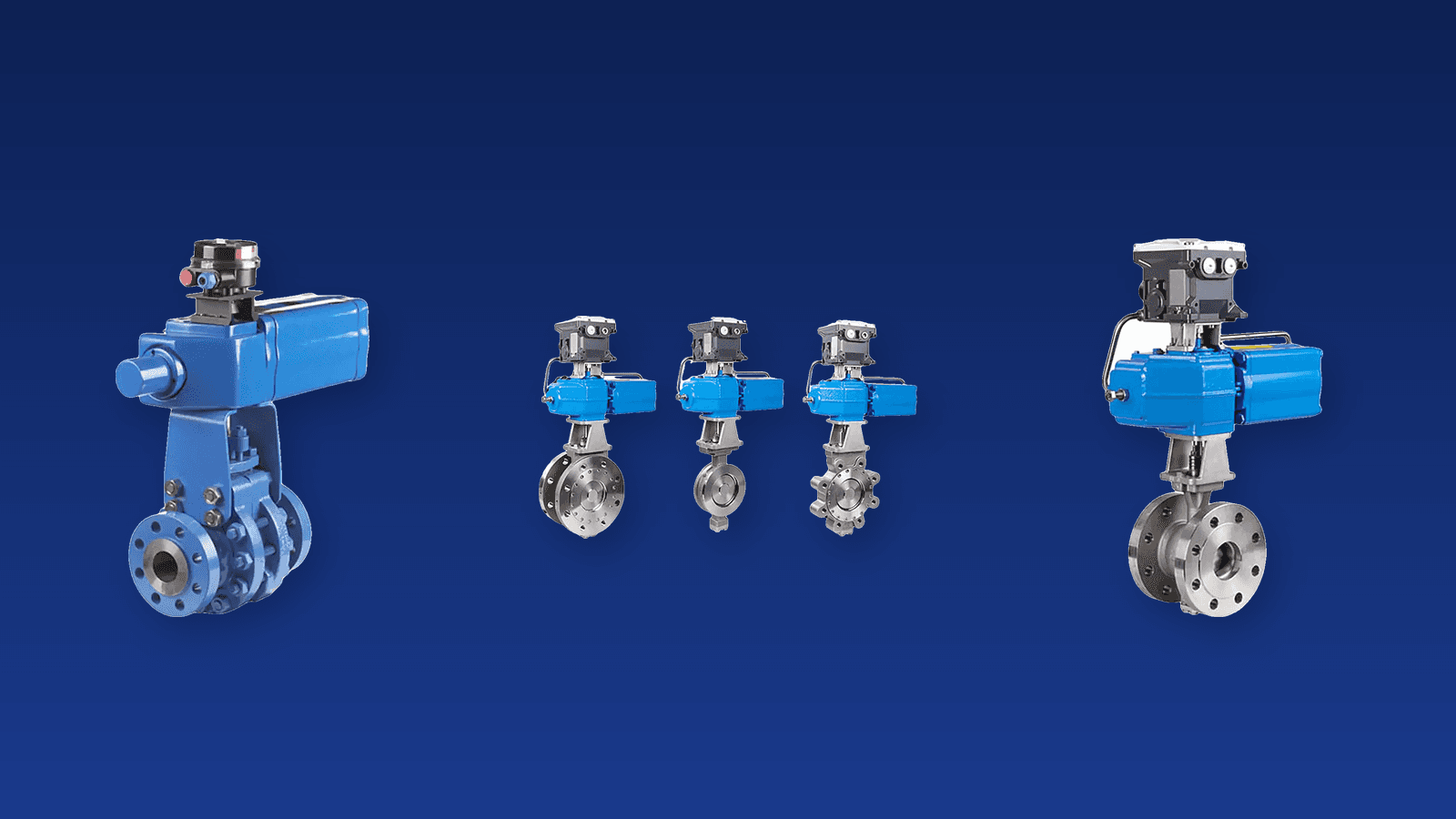
Ball and butterfly valves can go electric as well. The Bürkert Type 3005 is a compact electric rotary actuator for on/off and control duty that mounts directly on quarter-turn valves, with a manual override, adjustable limit switches and a multi-voltage version. For hazardous areas, the Type 3004 is an explosion-proof version that Bürkert lists with ATEX II 2 GD Ex d IIB T6 approval.
Selection checklist
- Check whether compressed air is available, reliable and economical at the valve location.
- Choose the body: angle seat for flow, globe for control precision, diaphragm for hygienic or aggressive media.
- Choose on/off (3320, 3321, 3323) or control (3360, 3361, 3363).
- Decide whether a fail-safe position is required and add the energy storage option.
- For ball and butterfly valves, use the 3005, or the 3004 in hazardous areas.
Territory Instruments can quote Bürkert electromotive valves and actuators matched to your medium, size and control signal.
Frequently asked questions
Can an electric valve fail safe?
Yes. Bürkert's 33xx electromotive valves offer an optional energy storage module that drives the valve to its safety position if power fails.
How fast is a Bürkert electromotive valve?
Bürkert publishes positioning speeds of up to 6 mm/s for the 3320, 3321, 3360 and 3361, and the control versions allow the speed to be adjusted to the application.
Are electromotive valves suitable for hygienic processes?
Bürkert describes the closed actuator design as supporting fast, residue-free cleaning, and the 3323 and 3363 diaphragm valves are designed for hygienic or aggressive conditions with IP65/IP67 protection.
Is there an explosion-proof electric actuator for ball valves?
Yes. The Bürkert Type 3004 is an explosion-proof rotary actuator for quarter-turn valves, listed with ATEX II 2 GD Ex d IIB T6.